Wednesday, September 30, 2009

“. . . this type of the English public school man.” (168)


In England, what Americans would traditionally think of as a private school is called a public school. Therefore, the attendance of such a school would indubitably put off an image of privilege – something Woolf would have known and used to her advantage when describing Hugh’s appearance and demeanor. Hugh is, as Woolf depicts him, a stereotypical product of elite institutions.

Source:

"Public school (privately funded)." Wikipedia, the free encyclopedia. Web. 30 Sept. 2009. http://en.wikipedia.org/wiki/Public_school_(privately_funded).

“. . .an omnibus. . .” (131)

An omnibus is like any other type of mass-transit vehicle: a cheap, easy way to get around. In Elizabeth’s waiting for this mode of transportation, she immediately becomes a member of the common class. Without a personal mode of transport, it is implied that her family lacks the financial position to make this possible. This impression leaves Woolf’s reader assuming things about her characters that cannot be fully known – fitting, given that so much of the novel focuses on outward appearances, while keeping innermost feelings, thoughts, and situations hidden.

Source:

"Omnibus - Definition from the Merriam-Webster Online Dictionary." Dictionary and Thesaurus - Merriam-Webster Online. Web. 30 Sept. 2009. http://www.merriam-webster.com/dictionary/omnibus.

Picture Credits:

Omnibus. Digital image. Transit Museum. Web. 30 Sept. 2009. http://www.transitmuseumeducation.org/images/vocab/photo_omnibus.jpg.

Outward Appearances

All characters throughout Woolf’s novel are, in at least some way, concerned with their outward appearance. From Clarissa’s blatant obsession with and concern about how those around her perceive her to Septimus’s apparent rejection of all social norms, each character is at all times aware of how their peers view them and work to make sure this view is molded in a certain way. From Clarissa’s party to Septimus’s suicide, all of Woolf’s characters craft their actions deliberately, with the intent to send a message to society.

Regret

From the very start of the novel, nostalgia sets in for Clarissa as she looks back on the moments she has already lived as sweeter than the present. She wonders about how her life could have been different had she made different choices: she wonders if she would have been happier had she followed her heart and not simply done what society expected from her. With this, Woolf is making a statement about the fleetingness of life, with the subtle push to urge all readers to buck convention if they so desire, so that when they are older, they don’t look back and wonder what could have been. Clarissa serves as a cautionary warning for all readers – make the most of your time now, so you won’t regret it later in life.

“Heaven was divinely merciful, infinitely benignant. It spared him, pardoned his weakness. But what was the scientific explanation (for one must be sc


Throughout Mrs. Dalloway, Woolf portrays society as illogical at times. With all its seemingly trivial concerns and obsessions, it is easy for readers to interpret England in the early 1920s as a ridiculous environment. With the infusion of a desire for a scientific explanation – the most logical of all arguments – suddenly Clarissa’s world becomes one more based in reality, moving out of the black hole of the sole worry of keeping up appearances.

“He had escaped! was utterly free – as happens in the downfall of habit when the mind, like an unguarded flame, bows and bends and seems about to blow

Throughout the novel, Woolf portrays many characters as living in a free nation and yet not truly free. Instead, they live in a restrictive society in which stringent rules exist governing all interactions. For Peter to feel such ebullience at the prospect of freedom for simply a short while speaks to this oppression and its presence in all strata of life. Without this instance of a well-to-do man feeling so free from societies bonds, it would be possible to interpret Woolf’s work as speaking solely to the condition of women, veterans, the lower-class, or any number of other minorities. With this depiction of Peter’s experience, however, it becomes clear that everyone in England is a potential victim of society – whether they appear to be at risk of meeting this fate or not.

Clarissa and Septimus as Opposites

Throughout the novel, Clarissa and Septimus lead parallel lives without coming in contact. In many ways, they are exact opposites of each other. While Clarissa is of a high social class who many see as never having faced any real adversity, Septimus is a shell-shocked war veteran of more meager means. And yet, the two of them have eerily similar perceptions of society as a whole, especially the social pressures that are placed upon them and the delicate balance they are expected to strike between their desire to lead private lives and the expectations placed upon them to interact with others. However, they are entirely different in the way they handle the stress this causes them. While Clarissa molds into what the masses expect her to be, losing herself in the process, Septimus chooses to take matters into his own hands and end his life rather than conform and being yet another unhappy clone. This is exactly the point Woolf was making with the two characters – while society make place undue pressures on every citizen, it is up to these citizens to decide their fates for themselves.

“Fear no more the heat o’ the sun / Nor the furious winter’s rages” (9) (repeated)

This repeated line comes from Shakespeare’s Cymbeline, Act IV, Scene 2 in which the characters Arviragus and Guiderius assume that the tragedy’s heroine – Imogen – is dead, and they process and eventually accept that this death is inevitable. This fits well with one of the major themes running through Mrs. Dalloway – everyone will die in the end, whether they want to or not. It is fitting that Clarissa thinks of these lines while she contemplates if her efforts are worthwhile: will they really matter when she is gone forever?
Source:
"Cymbeline - Act 4, Scene 2 by William Shakespeare." William Shakespeare - Complete Works of Shakespeare, Biography, Study Guides. Web. 30 Sept. 2009. http://www.shakespeare-literature.com/Cymbeline/19.html.

“. . . the tomb of the Unknown Warrior. . .” (130)


To further drive home the point to the reader of the just-ended war’s profound effects on the lives of British citizens, Woolf forces Miss Kilman to walk past the tomb of the Unknown Warrior while going about her regular business. By not being in an out-of-the-way locale, the tomb and its meaning are truly able to become a part of regular life for all people, imploring them to remember those who sacrificed everything in an effort to maintain freedom for all. For the reader, these prolific references to the just-completed war create an image of a nation torn apart by bloody warfare and finally beginning to put the pieces back together.


Source:

"The Unknown Warrior." Wikipedia, the free encyclopedia. Web. 30 Sept. 2009. http://en.wikipedia.org/wiki/The_Unknown_Warrior.

Picture Credits:

The Unknown Warrior. Digital image. The Unknown Warrior. Westminster Abbey. Web. 30 Sept. 2009. http://upload.wikimedia.org/wikipedia/en/f/f3/Unknown-warrior-london.jpg.

“She introduced him to everybody as Wickham.” (60)

In Jane Austen’s Pride and Prejudice, Mr. Wickham is a seedy sort of character. Under the guise of love, runs away with the youngest Bennett girl with no intent of marrying her – deception being only one on his list of less-than-ideal character traits. Woolf makes this allusion to compare Clarissa’s husband to Austen’s character, which is unpromising given what anyone who has read Pride and Prejudice knows of Mr. Wickham’s relationships with women.
Source:
"SparkNotes: Pride and Prejudice." SparkNotes: Today's Most Popular Study Guides. Web. 30 Sept. 2009. http://www.sparknotes.com/lit/pride/.

Disillusion with Britain

With World War I’s end, the British Empire no longer enjoyed its traditional feeling of invincibility. The Allies may have won the war, but the nation was indubitably devastated by its immense loss of life. This reality check led to a nation-wide feeling of disillusion with their nation. Much like the obviously soon-to-come end to the rigid rules placed on the citizens by society, the stringent restrictions placed by the British government on its citizens is soon to unfurl as well. Just as those who hold so dearly to English tradition are seen as artifacts of a time gone by, a similar fate is soon to befall British rule as colonies world-wide gain their freedom. This significant change in national tradition is sending British citizens into a tailspin throughout the novel: something Woolf was, without a doubt experiencing in her own life, just as her readers experienced it in theirs.

Homosexuality

For many of Woolf’s era, homosexuality was one of society’s biggest taboos and yet Clarissa admits that the day she kissed Sally Seton was the “most exquisite moment of her whole life” (35). While, on the outside, Clarissa appears to be a model woman in British society - acting just as she was expected to - this revelation serves as the antithesis to the ideal. By admitting that she had not only participated in kissing a woman but that she had liked it, Clarissa breaks out of the mold of her time period and the oppression placed on her by her contemporaries. While blatantly the picture of housewife perfection, Clarissa’s secret is her personal method of undercutting society and its traditional bounds.

Suicide

At the time of Woolf’s writing, suicide continued to hold a stigma in much of the Western world and yet Woolf chooses to end one of the main character’s lives through this stigma. Septimus feels so alienated from the society he fought so hard in the war to protect – sacrificing even his sanity for the cause; the only way he feels as though he can end this alienation and regain a shred of control over his life is by ending it. With this, Woolf was making a significant statement about the adaptations that had taken place in the world even in her lifetime. As people became more affluent and materialistic through the early 1900s, those individuals who held on to more traditional values of hard work, sacrifice, and dedication became increasingly rare as many within society considered them to be archaic and past their prime. Septimus serves as a warning handed down by Woolf as she observed the world around her; should society continue down its path, more and more people would become as alienated as Septimus and be driven to such extremes.

“And then at Constantinople, and again, and again.” (31)

Constantinople, modern-day Istanbul, was the seat of power in the Eastern Roman Empire from 395 until its collapse in 1453. The overthrow of what was, at one time, the most powerful city in the world, came as a symbol of great failure in the world. This failure is the allusion Woolf is making as Clarissa thinks of the city. She is alluding to the sense of failure Clarissa is feeling as she prepares for the party and worries that everything will not go according to her plans and that she will fail – just as she somehow has failed Richard in the city at some point in her lifetime.


Source:

"History of Constantinople." The Roman Empire. Web. 30 Sept. 2009. http://www.roman-empire.net/constant/constant-index.html.

Picture Credits:

Constantinople Map. Digital image. History of Constantinople. Web. 30 Sept. 2009. http://homepage.mac.com/paulstephenson/madison/byzantium/images/constantinople_map1.jpg

“. . . the Mendelian theory. . .” (27)


Mendelian theory, also known as Mendelian inheritance, is the explaination of the inheritance of traits between generations. Developed by Gregor Mendel in the late 1800s and gaining prominence around the turn of the century, this new idea challenged conventional scientific knowledge of the day and caused a significant uproar within the biology community. Woolf uses this as an example of one of the ideas from which Mr. Bentley must “get outside [or] beyond”, describing the new train of thought as one that plagues the educated man. This infusion of an obviously well-educated, intelligent, and thoughtful character changes much of the dynamic of the novel; Clarissa’s world is no longer filled with what could be perceived as only foolish and trivial thoughts, worries, and experiences.
Source:
"GENETICS." HCS. Web. 30 Sept. 2009. http://www.hcs.ohio-state.edu/hcs300/genetic.htm.

“For it was the middle of June. The War was over. . .” (4)

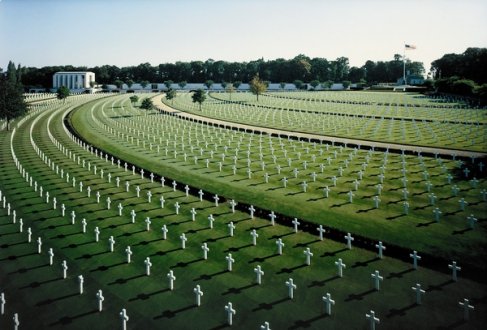
This “great war” that Woolf refers to – and it was a great war, for it needs no other distinction than the capitalization of a phrase that could define a plethora of conflicts in the history of the world – is indubitably what is now more commonly known as World War I. This war was fought between two alliances involving most of the world’s major nations: the Central Powers of Germany, the Ottoman Empire, and Austria-Hungary against the Allied Powers of Britain, France, the United States, Russia, New Zealand, Serbia, Canada, Australia, and Italy. In the interim between this conflict and the Second World War, World War I was often called The War to End All Wars and abbreviated as The War. It is fitting that Woolf would include this in her novel, for it helps cement the setting in the early 1920s, the June after the armistice treaty was signed. Britain and its colonies suffered over one million casualties during the war’s duration. With this widespread loss of life, every citizen was indubitably affected. With the end of the war, life could resume its new version of normal without the constant heightened tensions of the war. Finally, now that fighting has ceased, no one is apt to look down on Mrs. Dalloway’s party as unpatriotic of disrespectful to the war effort.

Source:


"World War I." Wikipedia, the free encyclopedia. Web. 30 Sept. 2009. http://en.wikipedia.org/wiki/World_War_I.
Picture Credits:
WWI English Casualties. Digital image. Treaty of Versailles - WWI. Web. 30 Sept. 2009. http://www.theodoresworld.net/pics/0506/englandImage1.jpg.