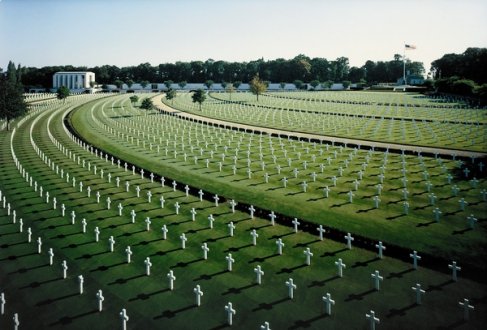
 This “great war” that Woolf refers to – and it was a great war, for it needs no other distinction than the capitalization of a phrase that could define a plethora of conflicts in the history of the world – is indubitably what is now more commonly known as World War I. This war was fought between two alliances involving most of the world’s major nations: the Central Powers of Germany, the Ottoman Empire, and Austria-Hungary against the Allied Powers of Britain, France, the United States, Russia, New Zealand, Serbia, Canada, Australia, and Italy. In the interim between this conflict and the Second World War, World War I was often called The War to End All Wars and abbreviated as The War. It is fitting that Woolf would include this in her novel, for it helps cement the setting in the early 1920s, the June after the armistice treaty was signed. Britain and its colonies suffered over one million casualties during the war’s duration. With this widespread loss of life, every citizen was indubitably affected. With the end of the war, life could resume its new version of normal without the constant heightened tensions of the war. Finally, now that fighting has ceased, no one is apt to look down on Mrs. Dalloway’s party as unpatriotic of disrespectful to the war effort.
Source:
"World War I." Wikipedia, the free encyclopedia. Web. 30 Sept. 2009. http://en.wikipedia.org/wiki/World_War_I.
Picture Credits:
WWI English Casualties. Digital image. Treaty of Versailles - WWI. Web. 30 Sept. 2009. http://www.theodoresworld.net/pics/0506/englandImage1.jpg.

very, very strong collection -- one entry could use some help with syntax and a fine tooth comb should be applied to weed out any typos
ReplyDelete